
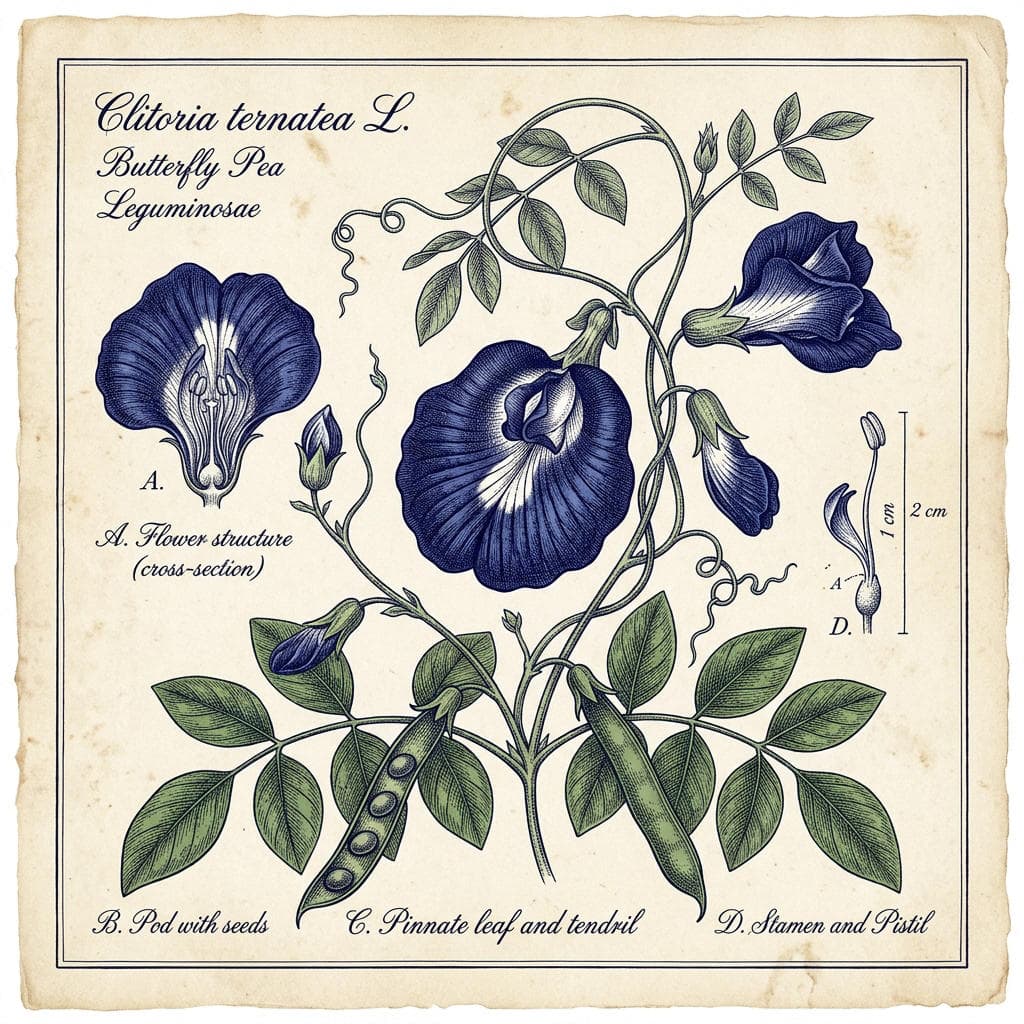
The vivid blue hue of *Clitoria ternatea* is driven by a specific class of antioxidants called ternatins, which are highly stable anthocyanins. In laboratory reviews, anthocyanins are studied for their potential to scavenge free radicals and reduce oxidative stress markers in cellular models.
The chemistry of pH shifts
Anthocyanin structures are highly responsive to the acidity of their environment. In a neutral water solution (pH ~7), the molecules present a deep blue structure. Introducing citric acid (such as lemon juice) drops the pH, causing the molecules to rearrange into a protonated form that reflects purple and pink light waves.
*Note: While laboratory trials on antioxidant pathways are promising, human clinical research is ongoing. Botanical infusions are intended as lifestyle additions rather than therapeutic treatments.*